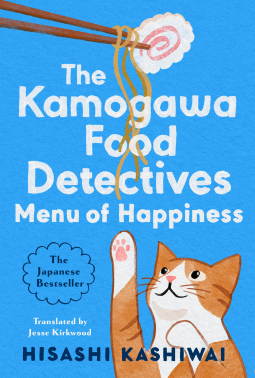
eating the past to heal the present
Hungry people come to Kyoto, to a small diner that doesn’t even have a sign. There is a friendly cat hanging outside, half napping but not missing anything. Inside, guests are greeted by Koishi, who tells them to sit wherever they want to and asks if they are hungry. She gets them a drink, wine or maybe sake, while her father Nagare puts the finishing touch on their meal. Their first time to the restaurant, the chef prepares a meal of small plates. There are meats and fishes, vegetables and fruit and sauces, each prepared to perfection. After that, there is rice and tea. And then, the talk.
Nagare leads them down the hallway filled with photos of food to a small office, where Koishi hands them paperwork. They fill out the forms with name and address and some other personal information, along with the name of the dish they are wanting Nagare to recreate. Koishi asks questions to give her father as much information as she can, and then over the next couple of weeks, Nagare uses the detective skills he honed as a policeman to find the recipe in question and all the details that made the meal so memorable to their client.
There is the dancer wanting to know what his father was trying to tell him over the kake soba noodle dish. There is a lacquerware maker who wants to make his daughter’s curry and rice for her son, since she is not able to. There is the former pianist who is searching for the yakisoba dish that changed her life, and caused the greatest heartbreak of her life. And there is the man who runs a small business hotel but still feels guilty over leaving his college girlfriend for the girl back home he’d promised to marry and wants to remember the gyoza he ate with her family.
Customers come to the Kamogawa Detectives because they have a hunger inside of them. There is something in their past that is holding them back from their best life. Their memories are tied up with a specific meal, and when Nagare figures out how it should taste and recreates the meal for the client, they walk away no longer hungry. The past is put to bed, and they can walk out into their future.
These stories are heart-warming and inspiring, and I love them all. Menu of Happiness is the third book in this series, translated from the Japanese, and each of these six stories sings to my soul. I wish I could try out these dishes because the descriptions are mouth-watering, but for now I will settle for reading about the Kamogawa detectives and just imagining how delicious and fulfilling these meals are.
Egalleys for Menu of Happiness were provided by G.P Putnam’s Sons through NetGalley, with many thanks, but the opinions are mine.