where does the thyme go?
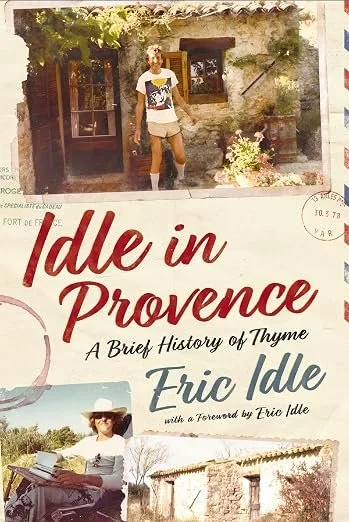
Eric Idle is one of the comic geniuses behind Monty Python, an iconic group of sketch comedians who showed up on the BBC starting in 1969 and made it to America in the mid 1970s, thanks to the film And Now for Something Completely Different and their television show Monty Python’s Flying Circus being added to PBS lineups. But before he’s made it to the States, Idle made it to France, where he put down roots.
He took some of his early Python money and bought a small parcel of land in Provence back when it was still unfashionable. The land had a small shack where he and his wife could spend vacations, but it was far from perfect. It didn’t yet have electricity. Or water. Or a road. It took years and the help of local friends to create a small vacation home with a working kitchen and a small plunge pool. That tiny house made for an ideal place for Idle and his family to get away from the noise and demands of London and show business. It gave him a quiet place to reflect and write. But it also left him wanting more.
As the years go by, they built up a new house, added gardens, created spaces for visitors and creativity, and made it into a place of warmth and comfort. It is a place where kids could run free and Idle could write songs, television shows, movies, books. They watched the stars, swam, cooked, ate, and grieved. There were a couple of wildfires that almost destroyed everything. There was divorce. There were friendships that soured. There was illness, and endings. But Provence became a place where Idle could heal, find love again, watch his kids grow up.
For most of these years, Provence was a place where Idle could be anyman. The residents didn’t care who he was outside of their town, and they didn’t care who his friends were. So when he brought Robin Williams to town when he couldn’t walk through a crowd without being called out for his sit com, Williams couldn’t believe how the locals left him alone and ended up yelling out, “I’m Mork” to the crowd, only to be continue to be ignored. Or when Idle introduced one of his best musician buddies to his longtime friend in France, she told him, “I like that George Harrison. What does he do?”
Idle in Paradise blends the author’s well-known wit and intelligence with his friendships, his challenges to build a second home in France, his personal struggles, and his creative accomplishments. He opens up about his crazy adventures, his moments of quiet sadness, and his longstanding perseverance.
When I first read Peter Mayle’s A Year in Provence, I was transported to a place I didn’t know existed, and I wanted to go back. When I saw that Eric Idle had also written a book about buying a place in Provence and turning it into a dream home, I was instantly enchanted. I wanted to go back to France for another adventure. And while the first part of Idle’s book is similar to Mayle’s, what happens next is so much more.
Idle brings us not just into his Provencal home; he brings us into his life. We see his heartbreak when a fire almost destroys everything. We see his ambition as he tries to write Spamalot. We see his playfulness as he joins up with friends and plays music, writes, and laughs. And we see his soul as he stares up at the stars and tries to understand the edges of the universe. This is not a book about a celebrity’s vacation home. This is a look into an artist’s humanity, and it is a trip I will not soon forget.
If you’re a Python fan, or a fan of Idle’s other works; if you’re a fan of celebrity memoirs with gossip about other famous people; if you’re a fan of stories about rundown European vacation homes, or just wanting to know what it’s like to live the life of an artist, then you will find something to enjoy about this book. I loved every page, and I can’t wait to visit Idle’s Provence all over again.
Egalleys for Idle in Provence were provided by Harper Select through Edelweiss, with many thanks, but the opinions are mine.